

Product dimensions, weight, fragility, accessory count and static sensitivity define internal clearances, fixed positioning and the level of cushioning or separation required.

Custom Packaging Products
Hefei Maohua Printing manufactures gift boxes, electronic product packaging, single-use packaging and luxury gift boxes for retail presentation, device protection and food-service use. The range covers rigid and folding paper packaging, protective inserts and disposable service formats, with structure, printing and finishing matched to the packed product and its handling environment.


Electronic Product Packaging
Custom Electronic Product Packaging for Secure Protection & Retail Presentation
Direct-manufacturer wholesale electronic product packaging en
read more

Single-use Packaging
Single-Use Packaging Solutions | Custom Disposable & Eco-Friendly Containers
Direct-manufacturer wholesale electronic product packaging engin
read more

Luxury Gift Box
Custom Luxury Gift Boxes | Rigid Presentation & Retail Packaging
Luxury gift box manufacturing requires rigid greyboard substrates, precision
read more
Define the Packaging Requirement Before the Box Style
Product handling, distribution environment and presentation level determine the packaging direction. These three factors separate a workable specification from a visually similar box that does not match the application.
Product Handling
Distribution Environment
Retail display, parcel shipping, catering service and gift presentation place different demands on opening, stacking, storage volume, surface protection and single-use performance.
Presentation Level
Standard branded packaging prioritizes efficient structure and clear graphics. Premium presentation places more emphasis on rigid form, controlled opening, surface detail and arranged product display.

Construction Changes with the Packaging Function
The material system sets the box stiffness, forming method, storage format and service condition. Maohua's current product range combines rigid board structures, folding or corrugated paper packaging and single-use service formats.
Rigid Board Construction
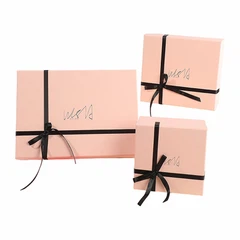
Greyboard wrapped with printed or specialty paper forms defined edges and stable lid-and-base, drawer, book-style and magnetic presentation structures used across gift and luxury packaging.
Folding & Corrugated Construction
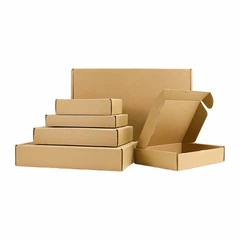
Paperboard and corrugated board support creased, die-cut and transport-oriented formats. These constructions reduce storage volume compared with pre-assembled rigid boxes and suit products that need efficient packing or added transit strength.
Single-use Service Construction
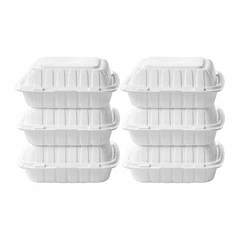
Paper cups and bowls require a food-contact barrier against moisture and grease. Plastic lunch containers and cutlery packs require material compatibility with the intended serving temperature, food contact and disposal route.
Control Fit, Protection and Brand Presentation
The useful customization points are the ones that change product fit, packaging performance or visual execution. Size, structure, material, printing, finish and inserts are grouped below by the function they control.
Size & Structure
Dimensions, opening style and box geometry follow the product size, accessory layout and packing orientation. Lid-and-base, drawer, book-style, magnetic and folding formats appear across Maohua's current packaging range.
Material & Insert
Rigid greyboard, paperboard and corrugated structures cover different stiffness and packing requirements. Paper trays, EVA and sponge inserts hold products in position, separate accessories and add cushioning where the packed item requires it.
Printing & Finish
Brand graphics integrate with printed paper surfaces, while lamination, foil stamping, UV and embossing or debossing define surface appearance and tactile detail where the selected substrate and structure support the process.

Packaging by Product and Service Environment
Maohua's product range covers three main use groups: presentation packaging for gift and premium retail products, protective packaging for electronics, and disposable formats for catering and food service.

Gift & Premium Retail
Tea, wine, cosmetics, jewelry, seasonal sets and corporate gifts use presentation packaging where opening structure, graphics and product arrangement form part of the retail experience.

Electronics & Accessories
Mobile devices, chargers, electronic components and small appliances require controlled internal movement, accessory separation and a structure matched to both retail display and transport handling.

Food Service & Single-use
Paper cups, paper bowls, plastic lunch boxes, cutlery packs and related disposable formats serve takeaway, catering and food-service operations where serving condition and material contact requirements define the format.

Production Control from Converting to Final Inspection
Production equipment includes automatic cover making, slotting, flatbed die cutting, paper mounting, corner attaching, casing, gluing and visual positioning, together with hot stamping equipment. The factory operates under an ISO 9001-certified quality management system.
Material & Print Verification
Incoming paper and board are checked against the order specification. Printed graphics are checked for artwork accuracy, registration and color consistency before forming.
Forming & Product Fit
Die-cutting, creasing, wrapping, gluing, corner formation, closure alignment and insert position are checked against the approved dimensions and assembly requirements.
Finished-batch Inspection
Finished packaging is sampled for dimensions, appearance, structure, insert fit and packing condition before shipment. Third-party inspection is supported when it is included in the order requirements.
Packaging Selection Questions
How does a Gift Box differ from a Luxury Gift Box?
-
Gift Box covers a broader range of branded presentation formats, including folding and rigid structures for seasonal sets, retail products and corporate gifts. Luxury Gift Box focuses on rigid construction, controlled opening, specialty wrap papers, decorative finishing and fitted presentation for products such as jewelry, perfume, cosmetics and premium gift sets.
When is rigid construction preferable to folding or corrugated packaging?
-
Rigid construction suits products that need a defined box shape, precise opening alignment, repeated handling or a presentation-led unboxing format. Folding paperboard or corrugated packaging is the stronger choice when flat storage, lower packaging volume, transport efficiency or outer-shipping strength has priority.
When does electronic packaging need a fitted insert or ESD protection?
-
A fitted insert is required when the device or its accessories would otherwise move, collide or lose alignment inside the box. ESD protection is specified for static-sensitive electronic parts and assemblies; it is selected from the component handling requirement rather than added to every electronic package.